Rio Carnival
Rio’s carnival returns every year before Lent: street revelry across the city, and samba-school parades on a separate avenue.
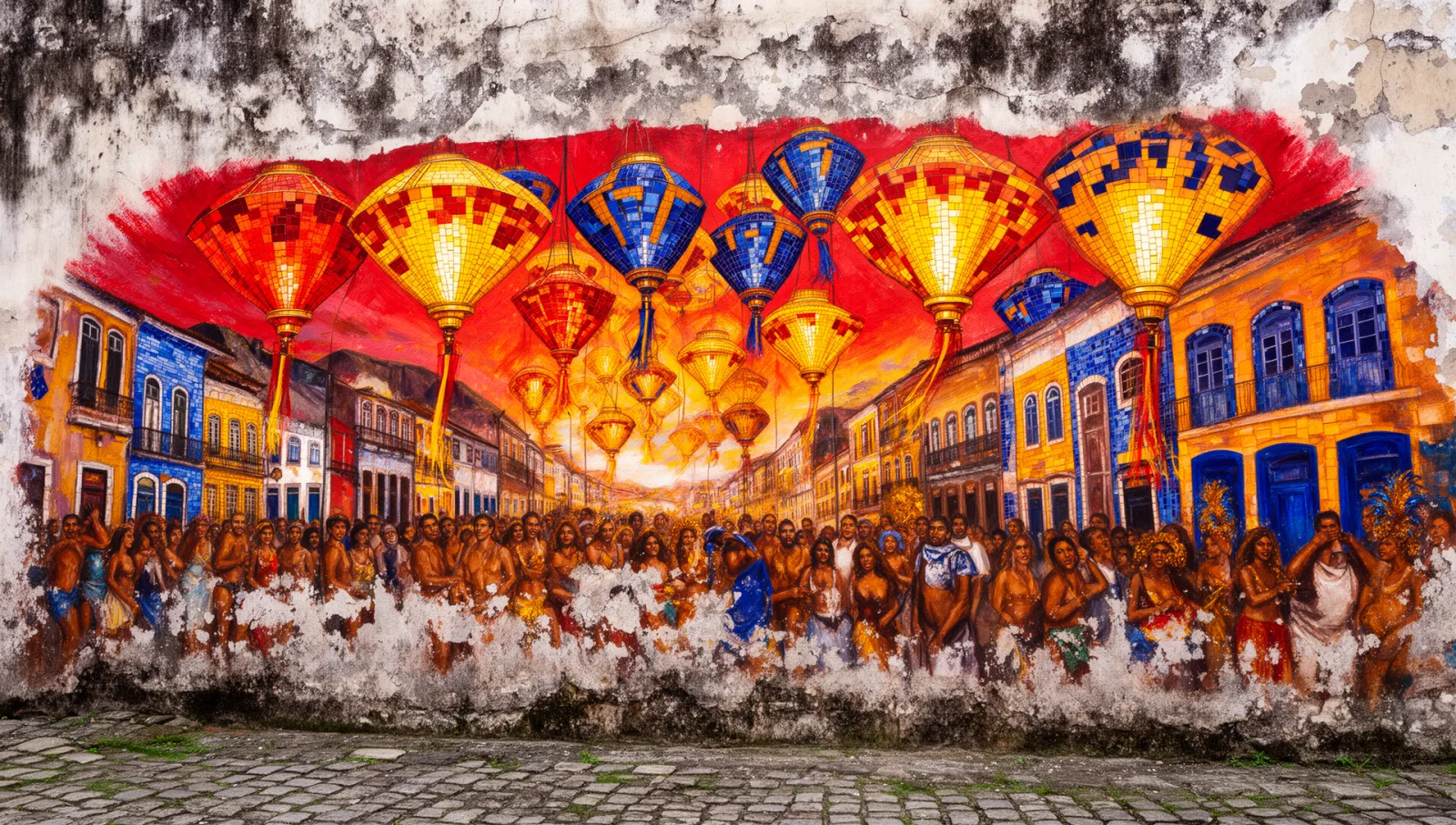
The first recorded festival in Rio was in 1723. Carnival is still held each year before Lent, with samba schools (neighborhood groups) presenting floats and choreographed entries.
Each school opens with the comissão de frente, then the first float and the master of ceremonies and flag bearer.
Music combines drum batteries with brass; guitars joined the palette in the early twentieth century.
Street carnival, with blocos and bands, is several times the size of the formal parades and fills many neighborhoods at once.
Lapa is a street-carnival neighborhood: the revelry is on the streets here. The competitive samba-school parade is at the Sambódromo.
The parade at the Sambódromo is about 20 minutes on foot from Lapa. Street carnival with blocos is in the neighborhood itself, not the same walk.
Places in this story
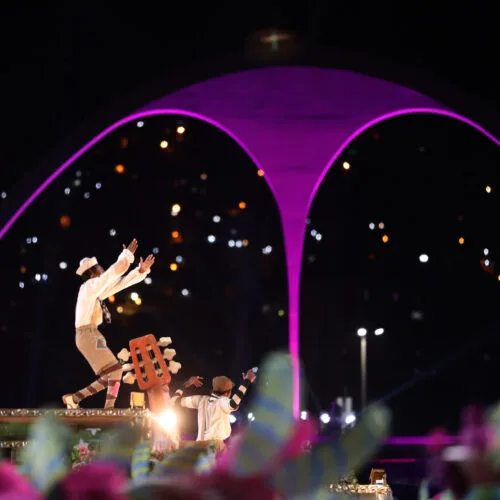
Sambódromo
Sambódromo is in Cidade Nova, about 20 minutes on foot from the studio.
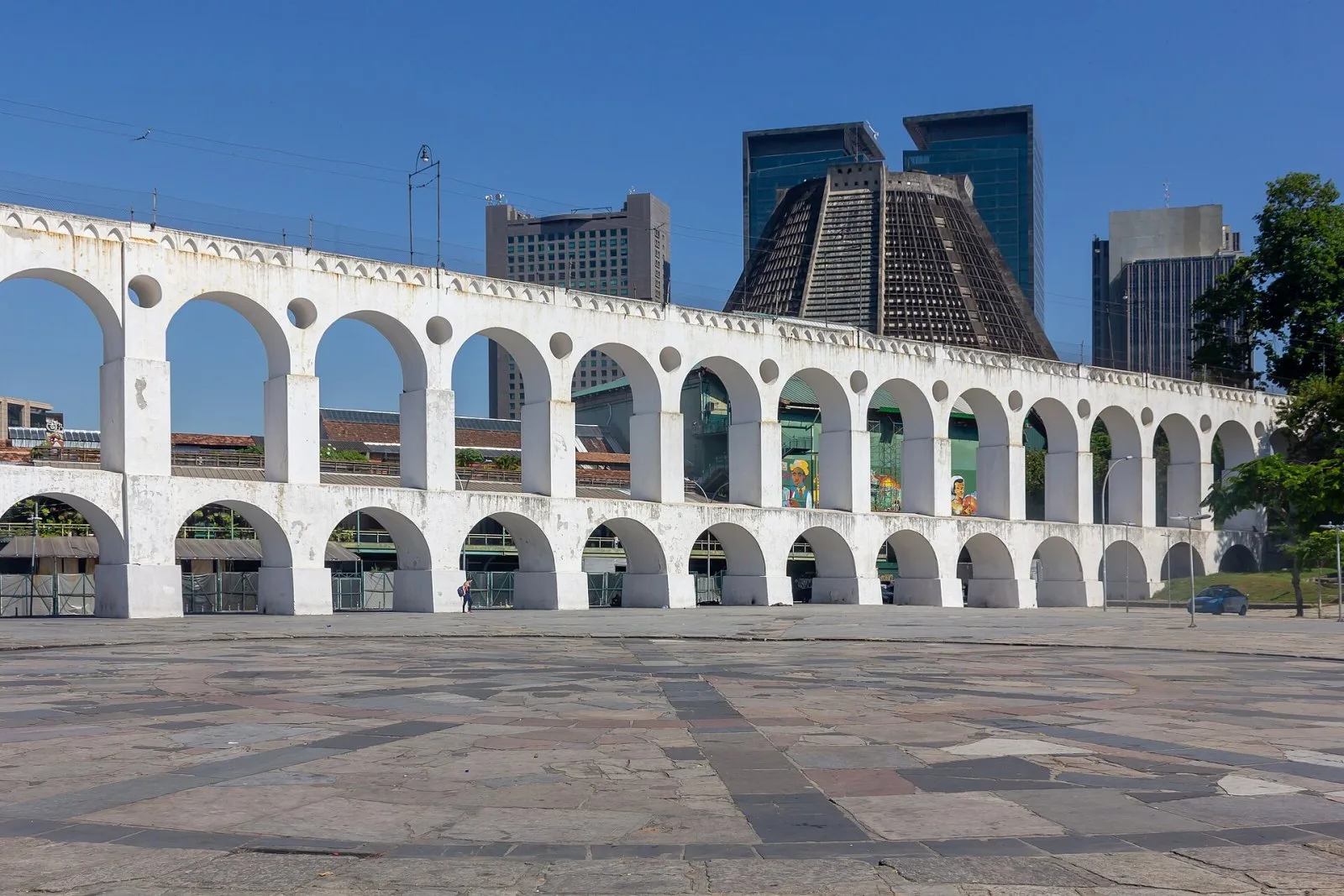
Arcos da Lapa
The Carioca Aqueduct, popularly known as Arcos da Lapa, is a striking 18th‑century stone structure that once carried water to Rio’s residents.
Stay nearby
Stay at Mural da Lapa; street carnival is in Lapa, and the Sambódromo is about 20 minutes on foot.